
 SPECOPS 3D
Filaments · Coming soon
SPECOPS 3D
Filaments · Coming soon

Premium 3D Printing Filaments
Quality & Testing
Reliable printing depends on more than appearance. SPECOPS 3D evaluates the practical behaviors that influence extrusion, layer quality, surface finish, and finished-print results.
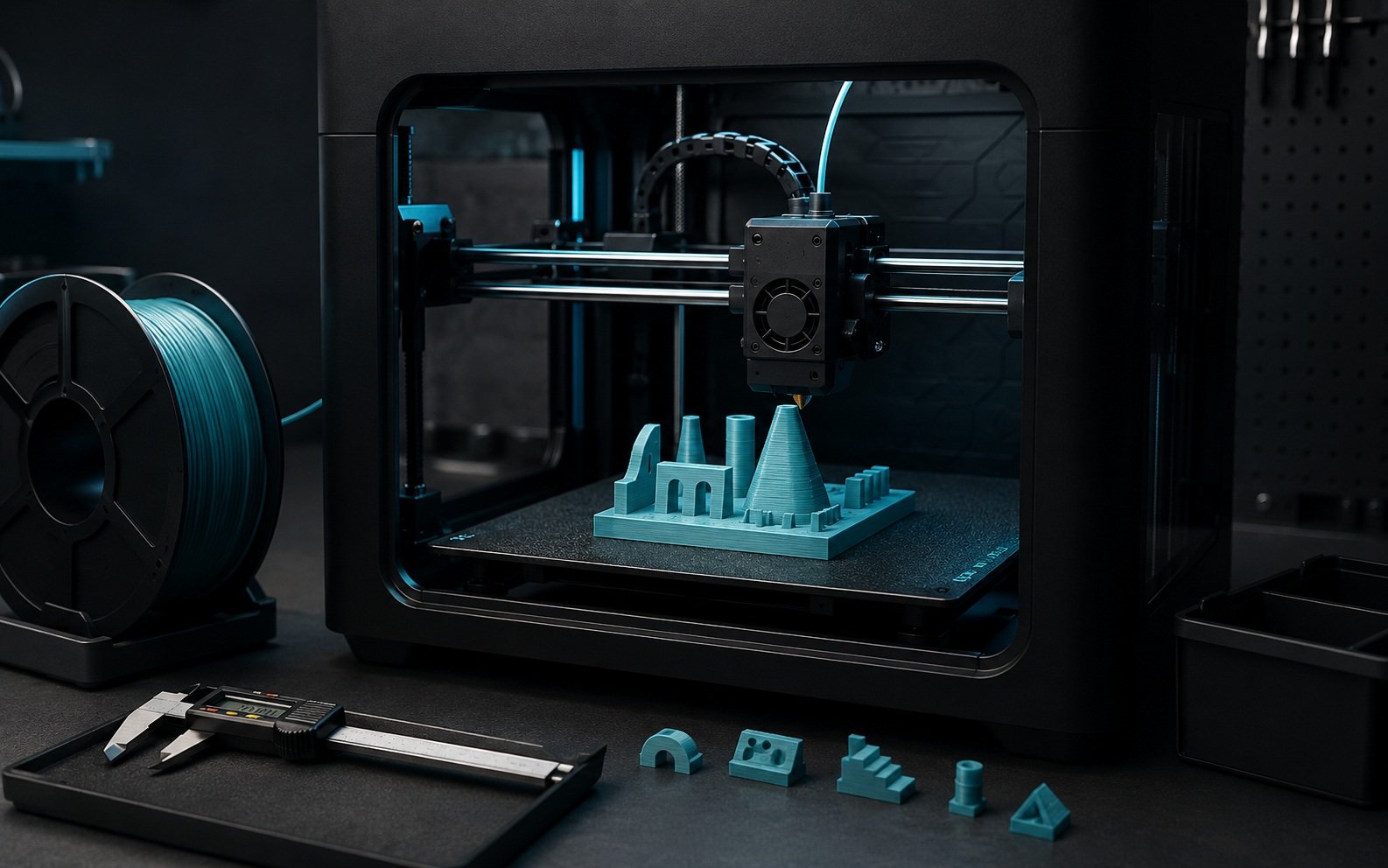
A practical standard
Our development approach focuses on how material behaves under real printing conditions. We study the details makers notice—from feeding and extrusion behavior to layer appearance and finished-part performance.
Testing helps establish useful starting guidance, but printer condition, part design, environment, and slicer settings can affect final results.
Observe how consistently material travels through the filament path and extrudes during sustained printing.
Review layer formation, surface consistency, transitions, and visible details across representative print shapes.
Evaluate how color and surface character appear under typical printing conditions and common lighting.
Observe dimensional behavior, layer bonding, and practical part performance without presenting unsupported guarantees.
From material to result
Begin with documented printer, nozzle, material, and slicer conditions.
Use practical geometries that reveal extrusion behavior, surfaces, details, overhangs, and layer transitions.
Review visible consistency, dimensional behavior, print interruptions, and completed-part characteristics.
Use observations to improve material-specific starting recommendations and troubleshooting information.
No filament operates independently of the machine using it. Nozzle condition, calibration, moisture, cooling, print speed, enclosure conditions, and model geometry can all influence the final print.
Product guidance should give makers a dependable place to begin while leaving room for printer-specific tuning. Final material pages can include validated starting settings, handling information, compatibility notes, and limitations once each product is finalized.
Final specifications, printing parameters, available colors, and material-specific performance information will be published with each released product. Development observations should not be treated as certified engineering data unless explicitly identified as such.
Limited pre-launch offer
Up to $10 off
Get early access to product announcements, printing guidance, and an exclusive launch offer worth up to $10 off your first qualifying order.
Join now & unlockLimited to new waitlist members. One offer per customer. Purchase requirements, expiration date, and complete terms will be provided with the launch offer. No cash value.